

The Ocean Doesn’t Know Your Borders
Don’t just be thinking we’re trying to save Ghana here. We’re trying to save everybody.

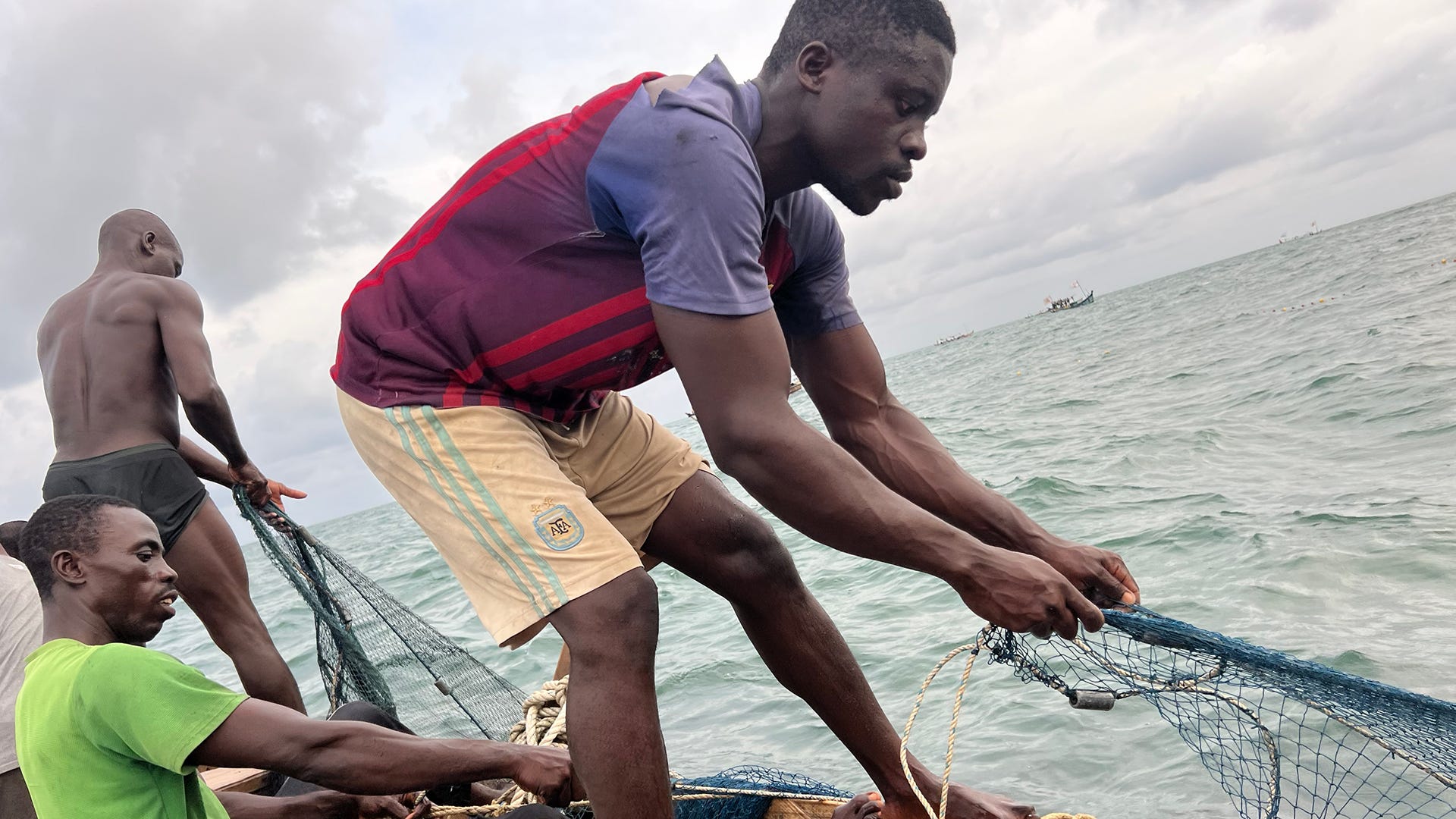
It’s the kind of line that sounds like rhetoric until you sit with it for a moment — and then it becomes something closer to a diagnosis.
Katie has spent years watching the waters off the West African coast, tracking the slow-motion pressure building on fisheries that millions of people depend on for food, income, and cultural identity. What she’s come to understand — and what she articulates with rare clarity in this episode — is that the ocean operating along the ECOWAS coastline is not a collection of national resources. It is one shared system. Ghana’s waters don’t end where Côte d’Ivoire’s begin. The fish don’t check passports.
And that means the stakes don’t, either.
When Katie talks about getting this story out before a fishery collapses, she’s not being alarmist. She’s making a case for the value of early attention — the kind of public awareness that can shift policy, attract resources, and change behavior before the moment of crisis forces everyone’s hand. Because once a fishery collapses, the conversation changes. It stops being about prevention and starts being about survival. About who eats and who doesn’t. About coastal communities that have no fallback.
The countries lining the Gulf of Guinea — Ghana, Togo, Benin, Nigeria, Senegal, and beyond — are, as Katie puts it, all in the same boat. The metaphor is almost too apt. These are nations with distinct histories, languages, and politics, united by a shared dependence on an ocean that is warming, being overfished, and increasingly contested by industrial fleets from outside the region.